
The Groundbreaking Legacy of the First Esport Tournament
The Rise of Esports: The First Esports Tournament
Esports, short for electronic sports, has become a global phenomenon with millions of fans and professional players competing in various video games. But do you know when it all began? Let’s take a trip back in time to explore the origins of esports and the first-ever esports tournament.
The Birth of Competitive Gaming
The concept of competitive gaming dates back to the early days of video games. As arcade games gained popularity in the 1970s and 1980s, players started competing for high scores and bragging rights. However, it wasn’t until the late 1990s that organized esports tournaments began to take shape.
The Turning Point: Red Annihilation Quake Tournament
In 1997, the Red Annihilation Quake Tournament made history as the first major esports event. Held at the E3 gaming expo in Atlanta, Georgia, the tournament featured players competing in id Software’s popular first-person shooter game, Quake.
Dennis “Thresh” Fong emerged as the champion of the tournament, winning John Carmack’s Ferrari 328 GTS convertible as the grand prize. This event marked a significant milestone in the evolution of competitive gaming and laid the foundation for future esports competitions.
The Legacy Continues
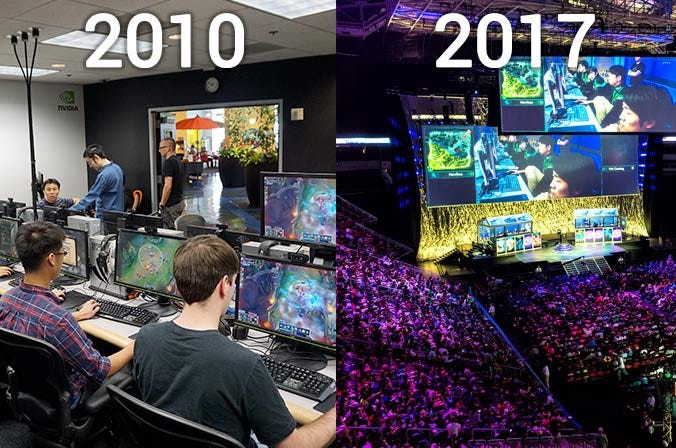
Since the groundbreaking Red Annihilation Quake Tournament, esports has grown exponentially, with professional leagues, multimillion-dollar prize pools, and global championships becoming commonplace. Games like League of Legends, Dota 2, Counter-Strike: Global Offensive, and Overwatch have captured the hearts of millions of fans worldwide.
Esports tournaments are now broadcasted on major networks and streaming platforms, attracting massive audiences and generating revenue through sponsorships and advertising. The industry shows no signs of slowing down as it continues to push boundaries and redefine traditional notions of sports competition.
Conclusion
The first esports tournament may have been a modest event compared to today’s grand spectacles, but its impact on gaming culture cannot be overstated. It paved the way for a new form of entertainment that transcends geographical boundaries and unites people from diverse backgrounds through their love for video games.
How the First Esport Tournament Revolutionized Competitive Gaming
- Pioneered competitive gaming as a legitimate form of entertainment
- Set the stage for future esports tournaments and professional gaming leagues
- Showcased the skill and talent of players in a public forum
- Attracted attention and interest from both gamers and non-gamers alike
- Established a precedent for substantial prize pools and sponsorships in esports
Challenges Faced by the First Esports Tournament: Awareness, Regulation, Technology, and Prize Limitations
- Limited awareness and participation due to the novelty of esports at the time
- Lack of standardized rules and regulations for fair competition
- Limited technological infrastructure for broadcasting and streaming the tournament
- Relatively small prize pool compared to modern esports tournaments
Pioneered competitive gaming as a legitimate form of entertainment
The first esports tournament, exemplified by the Red Annihilation Quake Tournament in 1997, pioneered competitive gaming as a legitimate form of entertainment. By showcasing skilled players competing in a structured and organized environment, this event demonstrated that video games could be more than just a casual pastime—they could be a platform for intense competition and spectator engagement. This pioneering spirit laid the foundation for the growth of esports into a mainstream industry that captivates audiences worldwide with its thrilling gameplay and professional players.
Set the stage for future esports tournaments and professional gaming leagues
The first esports tournament, such as the Red Annihilation Quake Tournament in 1997, set the stage for future esports tournaments and professional gaming leagues. By showcasing the potential of competitive gaming as a spectator sport and demonstrating the skill and dedication of top players, this pioneering event laid the groundwork for the growth and development of the esports industry. It inspired the creation of organized leagues, larger-scale tournaments, and lucrative sponsorship deals that have elevated esports to mainstream recognition and established a vibrant global community of professional gamers and enthusiastic fans.
Showcased the skill and talent of players in a public forum
The first esports tournament served as a groundbreaking platform that showcased the exceptional skill and talent of players in a public forum. By bringing together competitive gamers to compete in front of an audience, the tournament highlighted the dedication, strategic prowess, and reflexes of these players in a way that had never been seen before. This public display of gaming expertise not only elevated the status of professional gamers but also inspired a new generation of enthusiasts to appreciate and engage with esports as a legitimate and thrilling form of competition.
Attracted attention and interest from both gamers and non-gamers alike
The first esports tournament, such as the Red Annihilation Quake Tournament, successfully attracted attention and interest from both gamers and non-gamers alike. This groundbreaking event showcased the competitive spirit and skill of professional players in a way that captivated audiences beyond the gaming community. By drawing in spectators from diverse backgrounds, the tournament helped bridge the gap between gaming enthusiasts and those unfamiliar with esports, ultimately contributing to the mainstream acceptance and popularity of competitive gaming as a legitimate form of entertainment.
Established a precedent for substantial prize pools and sponsorships in esports
The first esports tournament, such as the Red Annihilation Quake Tournament in 1997, established a precedent for substantial prize pools and sponsorships in the world of competitive gaming. By offering a grand prize like John Carmack’s Ferrari 328 GTS convertible to the champion, this event showcased the potential for lucrative rewards in esports competitions. This milestone attracted the attention of sponsors and investors, paving the way for future tournaments to feature significant financial incentives and partnerships with brands looking to reach the growing esports audience. The success of early esports events set the stage for the industry’s evolution into a multi-billion dollar global phenomenon with high-stakes competitions and widespread corporate support.
Limited awareness and participation due to the novelty of esports at the time
Limited awareness and participation characterized the first esports tournament due to the novelty of esports during that period. With competitive gaming still in its infancy, many people were unfamiliar with the concept of organized video game competitions. The lack of mainstream recognition and understanding of esports hindered widespread participation, limiting the audience primarily to dedicated gamers and industry insiders. Despite these challenges, the pioneering efforts of early esports pioneers laid the groundwork for the thriving industry we see today, where esports tournaments attract global attention and engagement on a massive scale.
Lack of standardized rules and regulations for fair competition
The inaugural esports tournament faced a significant challenge due to the lack of standardized rules and regulations for ensuring fair competition. With competitive gaming still in its infancy, organizers struggled to establish consistent guidelines that would guarantee a level playing field for all participants. This absence of uniformity led to discrepancies in gameplay interpretation, scoring systems, and player conduct, potentially affecting the outcome of matches. As esports evolved and gained mainstream recognition, the need for comprehensive and universally accepted rules became increasingly apparent to uphold the integrity and credibility of competitive gaming events.
Limited technological infrastructure for broadcasting and streaming the tournament
During the first esports tournament, one of the significant challenges faced was the limited technological infrastructure available for broadcasting and streaming the event. With technology being less advanced compared to today, organizers struggled to provide a seamless viewing experience for the audience. Issues such as poor video quality, lagging streams, and limited coverage options hindered the ability to showcase the competition effectively. Despite these obstacles, the pioneers of esports persevered and laid the groundwork for future advancements in broadcasting technology that would revolutionize how esports events are presented to a global audience.
Relatively small prize pool compared to modern esports tournaments
In retrospect, one notable drawback of the first esports tournament, such as the Red Annihilation Quake Tournament in 1997, was its relatively small prize pool when compared to the staggering sums offered in modern esports competitions. While Dennis “Thresh” Fong’s grand prize of a Ferrari 328 GTS convertible was undoubtedly impressive for its time, it pales in comparison to the multimillion-dollar prize pools seen in today’s major esports events. This con highlights the significant evolution and commercialization of esports over the years, as lucrative sponsorships and endorsements have propelled competitive gaming into a highly profitable industry with substantial rewards for top players.


Leave a Comment